Kentucky Bourbon Butter Cake
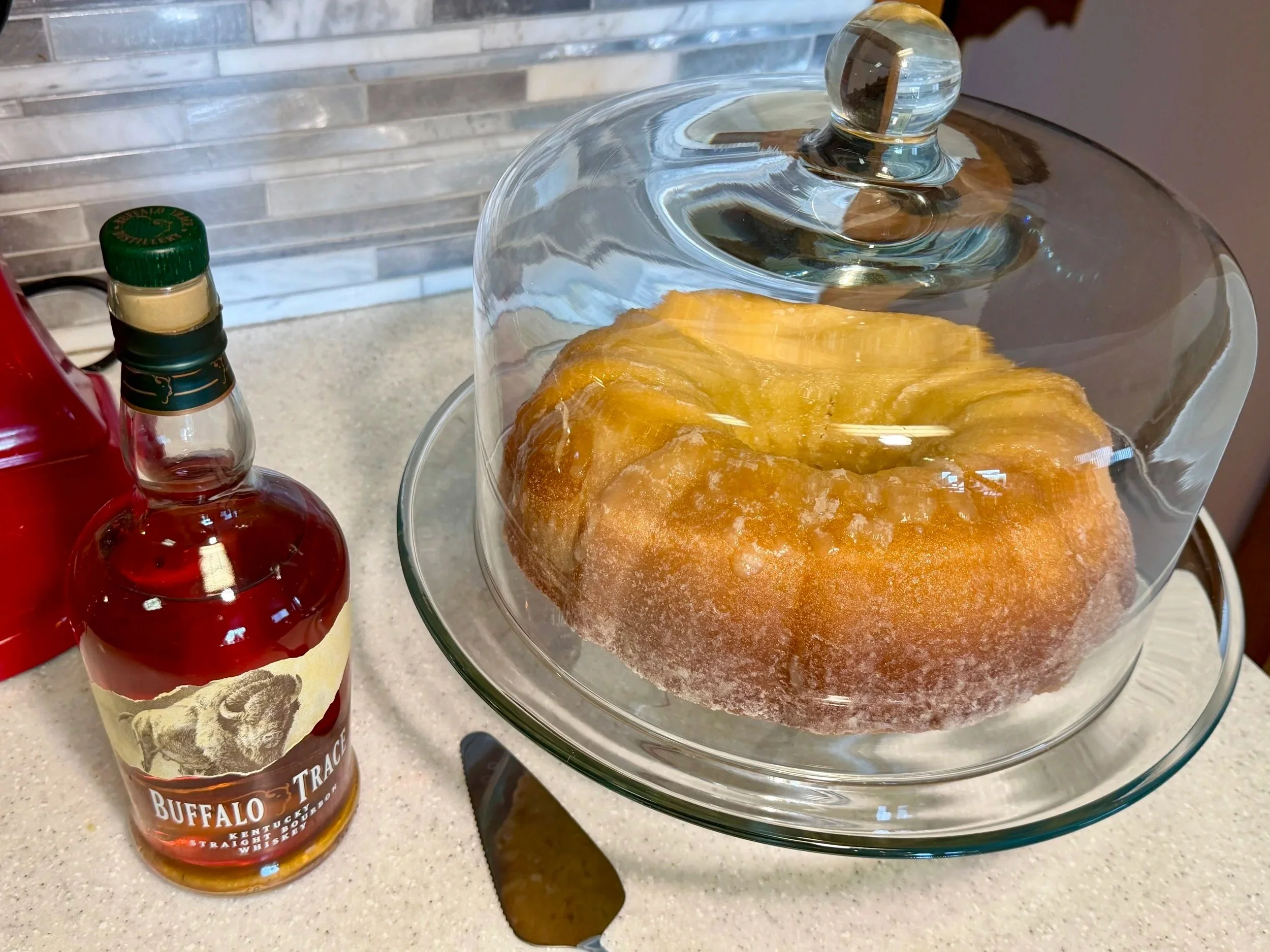
Kentucky Butter Cake
A remarkably simple buttermilk cake finished with a hot bourbon butter sauce and a distinctive crystalline crust.
Kentucky Butter Cake became famous after Nell Lewis entered it in the 1963 Pillsbury Bake-Off. Although the cake is often described as a prize-winning recipe, the historical record tells a rather different story.
This version retains the familiar all-in-one method and butter-sugar crust while replacing the vanilla in Nell’s original sauce with Kentucky bourbon.
Watch my video to follow along step-by-step.
Kentucky Bourbon Butter Cake
Yield: 12–16 servings
Pan: One-piece 10-inch, 12-cup tube pan
Oven: 325°F (165°C)
Ingredients
For the Cake
3 cups (375 g) all-purpose flour
2 cups (400 g) granulated sugar
1 teaspoon fine sea salt
1 teaspoon baking powder
½ teaspoon baking soda
1 cup (240 ml) buttermilk
1 cup (227 g) unsalted butter, softened
2 teaspoons vanilla extract
4 large eggs
For the Bourbon Butter Sauce
1 cup (200 g) granulated sugar
7 tablespoons (99 g) unsalted butter
1 tablespoon (15 ml) water
¼ cup (60 ml) Kentucky bourbon
Method
Prepare and chill the pan
Preheat the oven to 325°F (165°C).
Grease a one-piece 10-inch tube pan thoroughly, including the center tube. Dust it evenly with flour and tap out the excess.
Place the prepared pan in the refrigerator while making the batter.
Make the batter
Place the flour, sugar, salt, baking powder, baking soda, buttermilk, softened butter, vanilla and eggs in a large mixing bowl.
Mix on low speed until the ingredients are moistened and the loose flour has been incorporated.
Increase the mixer to medium speed and beat for 3 minutes.
Fill and bake the cake
Transfer the batter to the prepared pan and spread it evenly.
Tap the pan gently against the counter to settle the batter and release any large air pockets.
Bake for approximately 55–70 minutes, or until a tester inserted into the cake comes out clean. Make bourbon butter sauce in the interim.
Remove the cake from the oven to a wire rack, leave in pan.
Make the bourbon butter sauce
Combine the sugar, butter and water in a small saucepan.
Warm the mixture gently, stirring until the butter has melted and everything is hot.
Do not bring the mixture to a boil or try to dissolve every sugar crystal. The remaining crystals help produce the texture of the finished cake.
Remove the saucepan completely from the heat before carefully stirring in the bourbon.
Sauce the hot cake
Pierce the hot cake approximately 10–12 times, spacing the holes around its surface.
Pour the warm sauce gradually over the cake, allowing it time to enter the holes and work its way around the edges of the pan.
Allow the cake to rest in the pan for 8–15 minutes.
Unmold and cool the cake
Carefully loosen the cake around the outer edge and center tube, if necessary.
Invert the cake onto a wire rack or serving plate and gently lift away the pan. Brush on any leftover sauce.
Allow the cake to cool before slicing.
Larder Notes
The bourbon butter sauce should remain slightly grainy. Undissolved sugar creates the cake’s characteristic crystalline crust.
Unmold the cake after 8–15 minutes. Leaving it in the pan much longer may allow the sugary crust to adhere.
The crust is most pronounced on the day the cake is made. It gradually softens as the sauce settles into the cake.’s structure.
Recipe Provenance
Kentucky Butter Cake was entered by Nell Lewis of Platte City, Missouri, in the 15th Pillsbury Bake-Off in 1963. Her cake did not receive the grand prize or any of the eleven other documented awards, despite later accounts frequently describing it as a winning recipe.
Pillsbury published the finalists’ recipes, allowing Kentucky Butter Cake to circulate among home bakers. Over time, the cake acquired both an embellished history and numerous adaptations, including the now-familiar addition of bourbon.
© 2026 Gary R. Rice. All rights reserved.
This work, including all original recipes, text, images, and related media, is the intellectual property of Gary R. Rice. No part of this content may be reproduced, published, distributed, or adapted in any form without prior written consent from the author.
Personal, non-commercial use is permitted with clear attribution. Commercial use, including publication, broadcast, or syndication, is strictly prohibited without express permission.
All rights to this content are retained personally by Gary R. Rice, regardless of any business or channel name under which the material is published.